
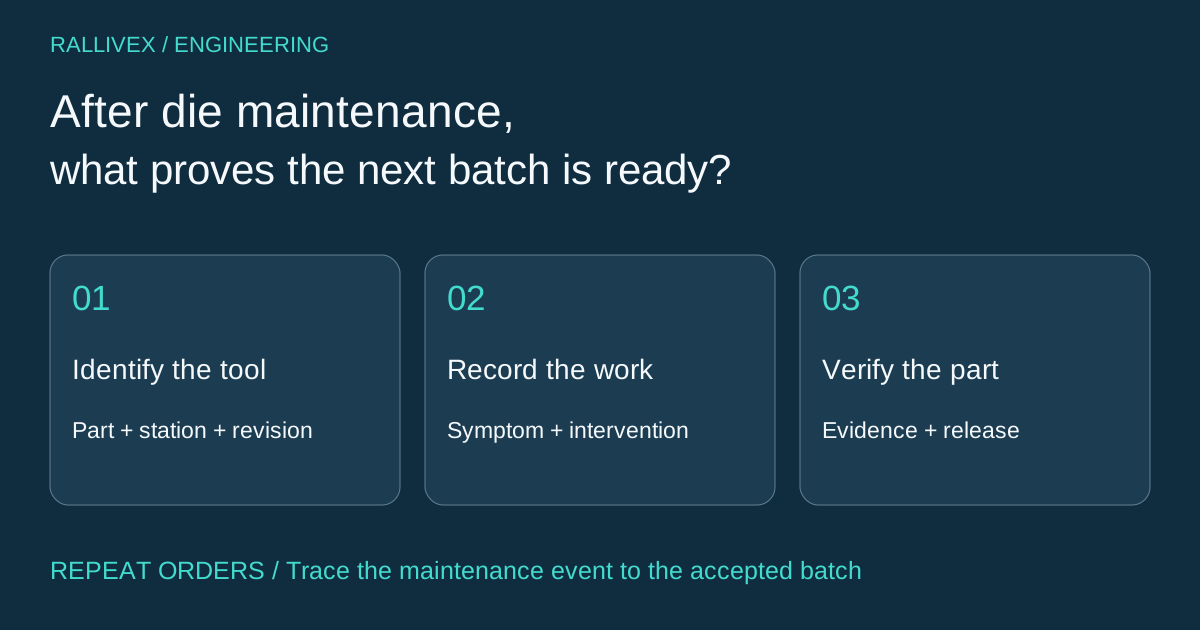
1. Link the maintenance event to the next accepted batch
Before a repeat order resumes after progressive-die maintenance, request a record linking the tool and affected station to the work performed, the current part revision, and the checks used to release the next batch. A note saying that the die was serviced does not tell the buyer which features were affected or whether the resulting parts still meet the agreed specification.
The record should distinguish routine restoration from an intentional change to geometry, tooling material or process conditions. The release checks should follow the affected characteristics and the customer agreement; not every cleaning operation needs a full new first-article report. This guide proposes a practical review record, not a universal maintenance interval or a claim about a particular factory's tooling system.
2. Capture the symptom before choosing the repair
Mate's punch-tooling guidance describes more pronounced burrs, changes in punching sound and visible cutting-edge deterioration as signals to investigate tool condition. Its guidance concerns punch-press tooling; it does not establish a fixed stroke limit for every progressive die. Record the actual observation, the station involved and the operating context rather than writing only that the tool has reached a certain age.
Burr changes should not automatically be assigned to dull tooling. Dayton Lamina explains that punch-to-die clearance depends on the workpiece material and thickness and that unsuitable clearance affects edge quality and tool life. Include the material grade, sheet thickness and relevant batch reference in the investigation. A photograph of the edge can support the record, but dimensions and an agreed inspection method are needed where the drawing limits the burr or hole geometry.
3. Record what changed at the affected station
Use the tool ID and station number to identify the serviced punch, die insert or other component. Record the reason for intervention, component identification, work date and person responsible. For a cutting-edge regrind, record the measured material removal or resulting component dimensions and the setup checks required by the applicable tool design. Mate notes that sharpening removes material and that grinding technique matters; its example grinding amounts should not be copied into unrelated tooling instructions.
A replacement should be identified precisely enough to distinguish a like-for-like spare from a different tip geometry, material or coating. Keep the maintenance event number even when the released part drawing does not change. If the intervention intentionally changes an approved feature or agreed process, connect it to the engineering-change decision and the required authorization. The purpose is to make the next sample results traceable to an identifiable tool state.
4. Select checks from the affected features
For a hypothetical bracket die, suppose a piercing punch is replaced while the forming station remains untouched. The release review should identify the hole size and location, the specified edge condition and any related assembly feature that the intervention could affect. Do not report a forming-angle measurement as the sole evidence that the piercing repair succeeded. Equally, do not assume that an untouched station eliminates the need to consider downstream interactions.
Record the trial material, setup reference, sample identifiers, measurement results and disposition against the current drawing. Include forming or assembly checks where the intervention can affect them. Agree the sampling scope with the customer or responsible quality function; this article cannot prescribe a universal sample quantity. If the evidence fails an acceptance criterion, retain the nonconforming result, record the corrective action and repeat the relevant verification before releasing the batch.

5. Close the record and define the repeat-order scope
The completed record should connect the maintenance event, verification results and release decision to the production batch. State who reviewed the evidence and when release occurred. Unresolved deviations need an explicit disposition; an old approved sample should not silently override the current drawing. Retain the relevant comparison sample or documented measurements according to the project agreement so a later issue can be investigated against the same references.
For a RALLIVEX repeat-order enquiry, provide the part number and revision, quantity, material and finish requirements, and any known tooling or quality history. Identify which dimensions, edge conditions or assembly interfaces are critical and whether customer approval is required after specified changes. Ask the quotation to identify the maintenance responsibility, proposed verification scope and any exclusions. You can begin an enquiry without a drawing; controlled specifications are needed before manufacturing approval.