Thermal contact and mounting
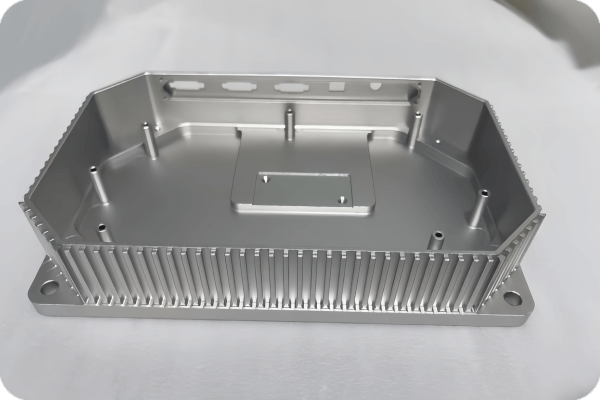
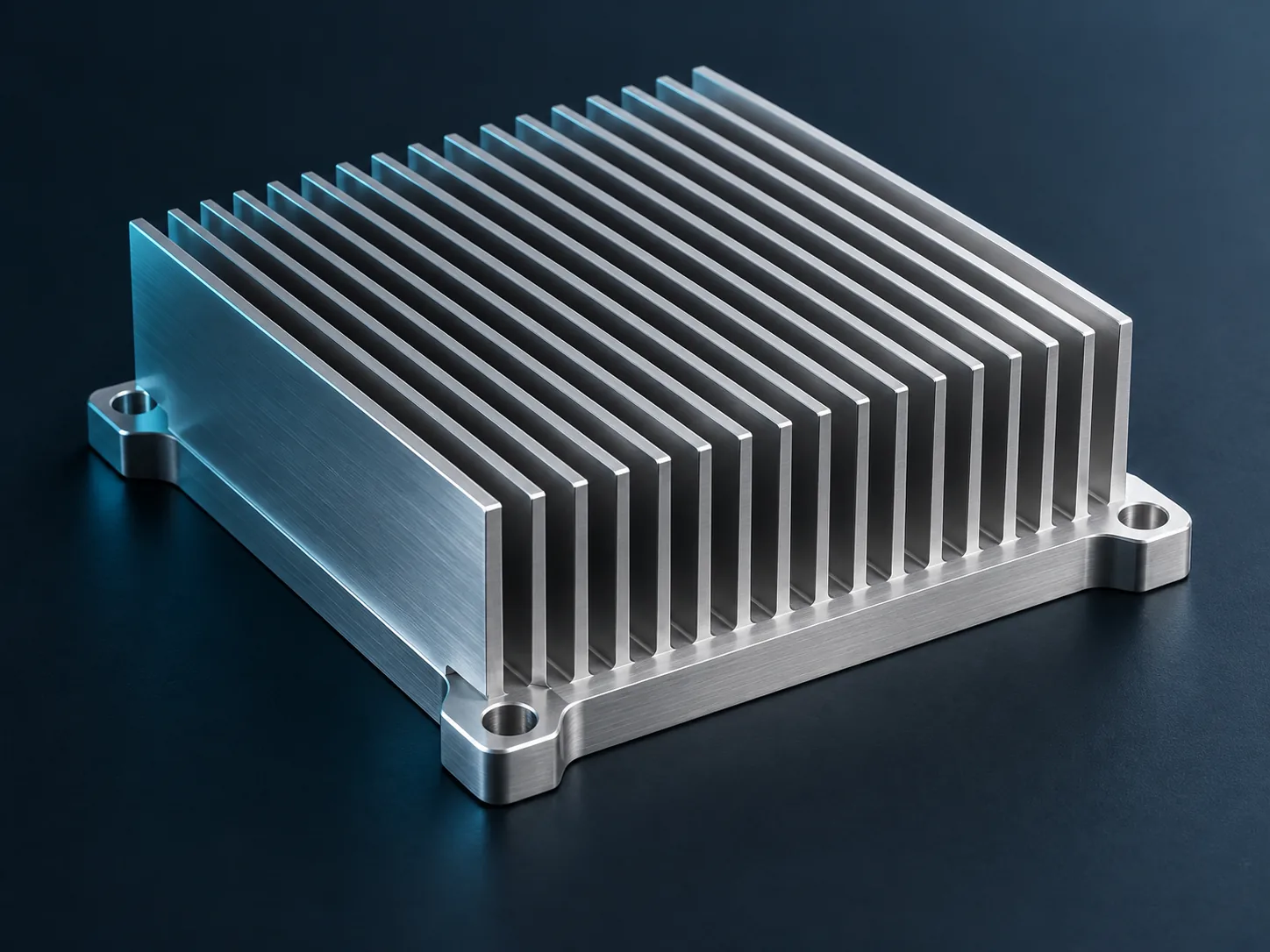
Identify contact faces, mounting holes and the requirements for flatness or finish stated by the design. Describe any interface material and assembly conditions that affect acceptance. Do not infer those requirements from the external appearance of a heat sink.
Fins and manufacturing route
Provide fin geometry, spacing and the full component model. Machining from stock and machining an extruded or cast blank are different starting routes. If either is acceptable, identify that flexibility so it can be reviewed rather than assumed.
Material and treatment
State the alloy and any finish requirements, including masked thermal or electrical contact regions. The material choice and surface condition belong in the project specification. A black surface in a photo does not prove a particular coating or thermal performance.
Separate component and system tests
Agree the dimensional and surface checks included in the component order. If a thermal test is required, define the system, conditions and acceptance criteria separately. LED lifetime, operating temperature and environmental sealing are not guaranteed by a generic component page.
Project questions
Will machining a heat sink prove that the device runs cool enough?
No. Cooling depends on the complete thermal system and operating conditions. Component inspection and thermal-system validation need distinct scopes.
Can a heat sink also serve as an enclosure?
A design may combine those functions, but mounting, cooling and sealing requirements still need individual definition and verification.