A certificate and a traceable part are different
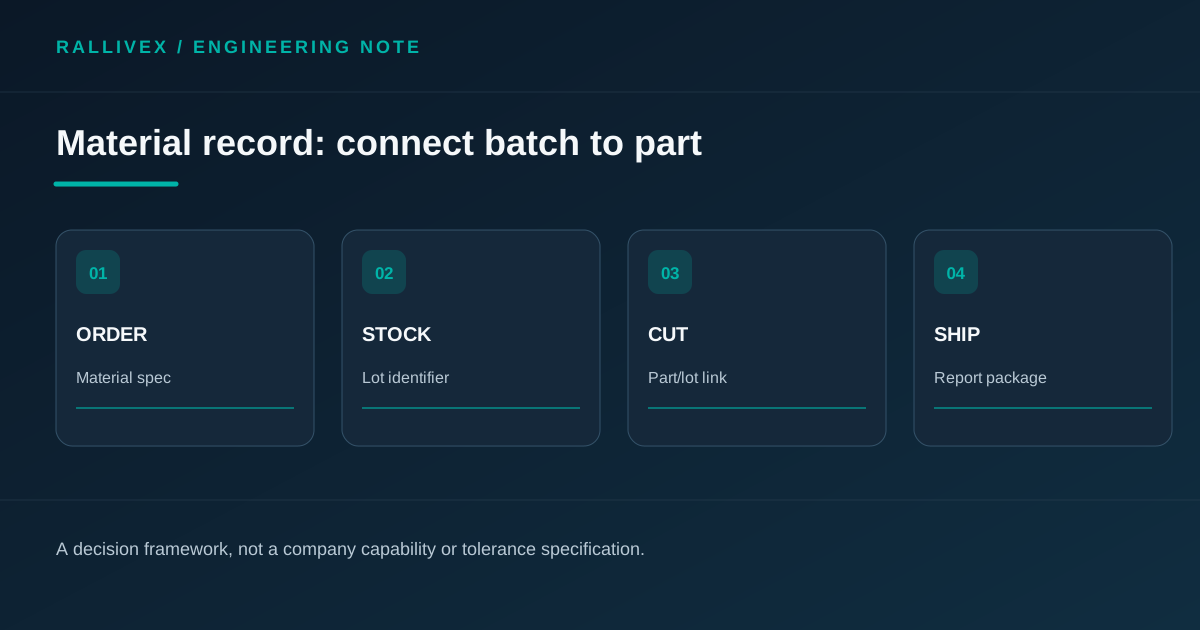
A mill or material certificate describes identified stock or a specified product batch under a stated standard. It does not automatically prove that a particular machined part came from that stock. The evidence chain also needs a way to connect received material, cutting or production lot, work order and shipped parts. A certificate with a matching alloy name but no batch link answers only part of the buyer’s question.
NIST’s manufacturing supply-chain traceability work emphasizes interoperable exchange and verification of information across supply chains. For a custom part, the practical requirement is a controlled identity chain. The buyer should define the level of identity needed before procurement: order-wide, batch, sublot, individual serial number or another contract-specific level.
Choose the document type by material and contract
Different materials and industries use different inspection-document rules. ISO 10474:2013 defines types of inspection documents for steel products according to the order, and ISO 404 describes related steel delivery requirements. Neither standard should be silently applied to aluminum, plastics or every machined item. For those, use the applicable material specification and purchase-order requirements, and ask what the supplier can actually obtain from the mill or distributor.
State the grade, temper or condition, product form, governing standard and revision, and the certificate type required. If chemistry or mechanical test values are needed, specify that explicitly. A generic “certificate of conformity” may only attest to a supplier statement and may not include the requested mill test results.
Preserve the link through cutting and mixing
Ask how incoming bars, plates or sheets are identified after unpacking, what happens when stock is cut into smaller blanks, and whether multiple heats or lots may be mixed in one production batch. If mixing is allowed, a shipment may need a list of all contributing material lots. If it is prohibited, define segregation and labeling expectations. Rework, finishing and repacking are further points where identifiers can be lost.
For critical assemblies or regulated contracts, lot labels on finished packaging and a work-order cross-reference can make an audit possible. The exact record format is project-specific. A photograph of a certificate or a generic claim of “full traceability” is not enough to show the chain from stock to delivered items.
Make the RFQ and acceptance test precise
Include the required certificate type, material standard, traceability level, lot-mixing rule, final label content and record retention period in the RFQ. Ask the bidder to state any exception before order placement. At receipt, compare the certificate identifier to the shipment label and the order’s part revision; if a link is missing, request clarification before treating the package as accepted.
This guide does not claim that every RALLIVEX part includes a mill certificate or that any legacy-site promise applies automatically. The required evidence follows the purchase agreement and product risk. A simple low-risk prototype may need less documentation than a safety-critical production component, but both benefit from a clear written decision.