
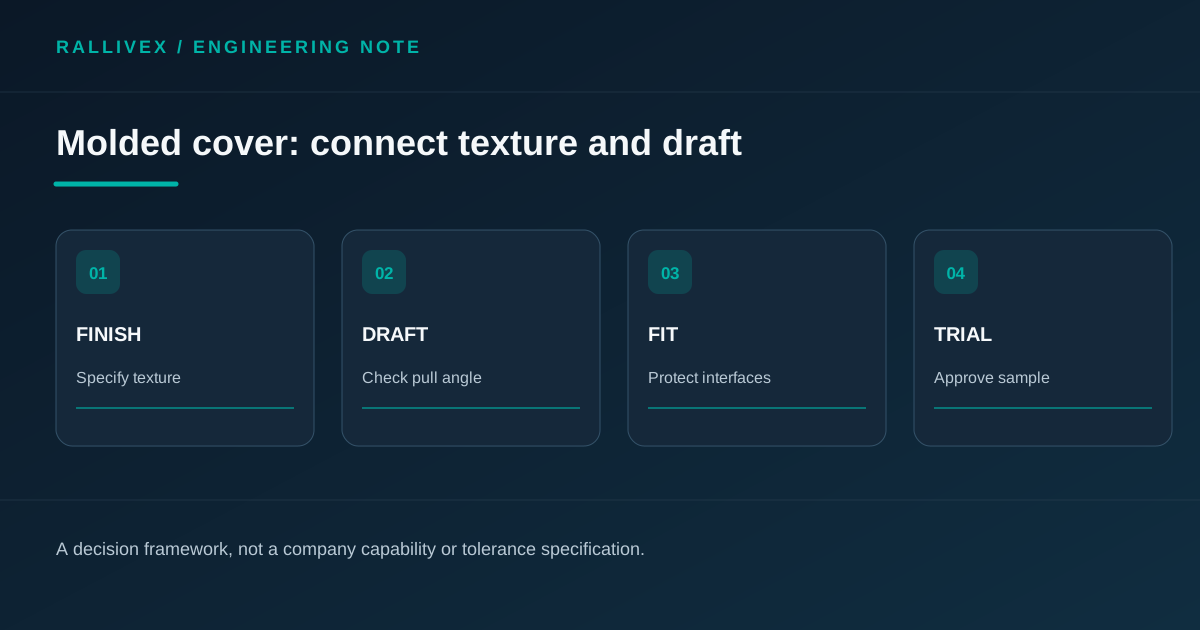
Define the texture as a controlled surface requirement
A molded cover can have a visible exterior, hidden interior, gasket land and mating lip within a few millimeters of one another. A note such as “fine texture all over” does not tell the toolmaker where the pattern should stop or how the part will be judged. Mark the appearance faces on the model or drawing, identify the finish reference or approved sample, and name surfaces that must remain smooth for sealing, sliding, bonding or measurement. Specify the resin and color alongside the finish because the visible result depends on more than tool texture alone.
The former Rally site lists plastic electrical enclosures as a product category, which is useful application context but does not establish the finish or draft for a new cover. Distinguish a molded production part from a machined prototype before transferring notes between drawings. A machined sample can validate assembly space, yet its square walls and machined appearance may not predict molded release or texture.
Review draft in the actual mold-opening direction
Draft is the taper on a face that would otherwise run parallel to the mold-opening direction. Autodesk notes that material, ejection depth, part complexity and mold-surface texture all influence the selected angle. Its draft-angle result depends on the model orientation relative to the assumed parting plane; a color plot made in the wrong orientation can therefore mislead a design review. First agree the opening direction and likely parting line, then inspect every textured wall, boss and recess against that direction.

Texture adds surface relief that can resist release and leave drag or scrape marks when a cover is ejected. Protolabs provides different draft guidance for its own light and heavier textures, but those values are process-specific guidance, not a universal RALLIVEX tolerance or a substitute for the actual texture supplier's recommendation. Ask the molder and texture provider to review the specified pattern depth, wall height, resin and release strategy together. If a functional wall cannot accept the proposed taper, record the conflict rather than silently changing the mating geometry.
Protect fit where draft changes the envelope
A small angular change across a tall wall can alter the cover opening, lip engagement and visible gap. Define which end of a wall carries the controlled dimension and check the fit at the assembly datum rather than at an arbitrary section. Internal ribs, snap hooks and screw bosses may need different draft directions from the exterior cavity wall. Do not move a sealing edge or connector interface merely to keep one appearance face uninterrupted; give those functional zones priority and decide where a texture break can be accepted.
Core and cavity placement also matters. Protolabs' core-and-cavity guidance explains that an exterior cover face with heavy texture and inadequate draft can stick to the cavity side. Review where the part is expected to remain during mold opening and how it will be ejected. An apparently cosmetic choice can change the tool layout, and an ejection change can move witness marks onto a face the customer expected to remain clean. Coordinate the texture map with the separate gate, ejector and parting-line reviews.
Approve the finish on molded trial parts
Before the tool is released, agree a review package: controlled CAD revision, resin and color specification, texture reference, marked cosmetic zones, opening direction, draft analysis and protected mating faces. Ask for an explicit exception list where the desired finish or angle cannot be made without affecting fit. If a texture pattern is directional, show its orientation on the cover so the tool texture does not rotate unexpectedly across adjacent faces.
At trial, inspect real parts for drag, scuffing, texture continuity, color consistency and assembly fit under agreed lighting and viewing conditions. Retain a signed-off sample or documented photo set tied to the tool and part revision. A visual simulation or catalog swatch helps with planning but cannot alone approve the finished cover. Record any change to the texture boundary, draft, resin or ejection method and repeat the affected fit and appearance checks before production approval.