Both 6061 and 7075 are widely used aluminum alloy families, but the number on the drawing is not a complete material specification. Temper, product form and governing material standard also matter. The Aluminum Association describes 6061 as a broadly used 6xxx alloy and 7075 as a familiar high-strength 7xxx alloy used in aircraft applications. That does not make 7075 the default upgrade for every machined component.
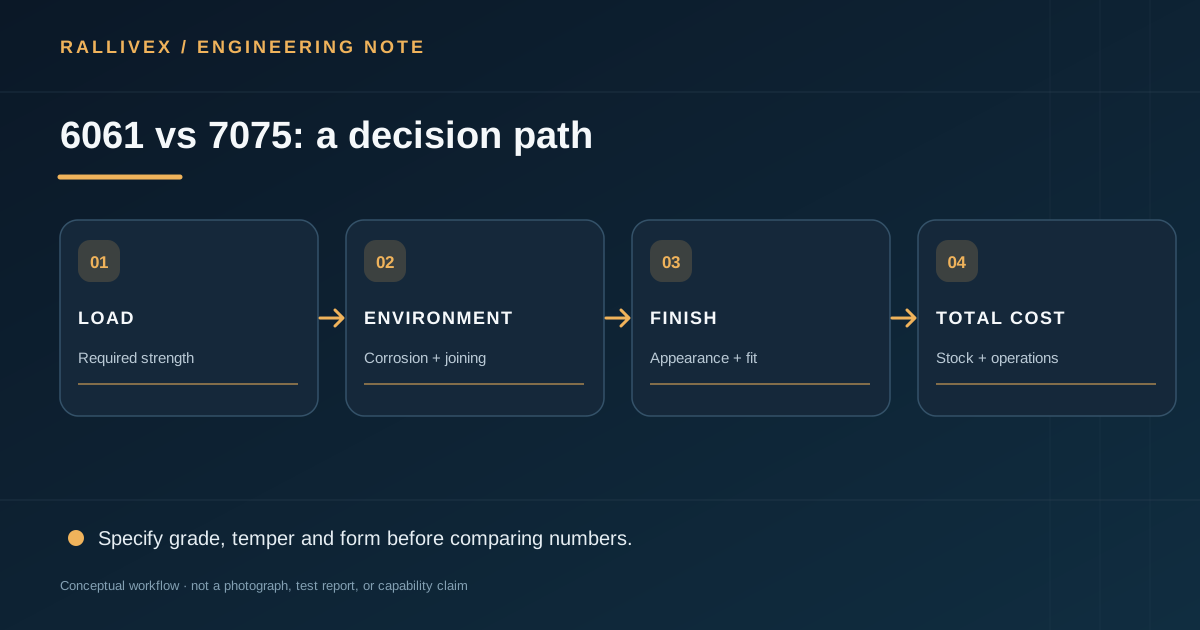
Begin with the load case
If the part is a general housing, bracket or fixture and high strength is not the dominant requirement, 6061 is often the first grade to investigate. If a load-bearing design needs higher strength at low mass, 7075 may justify review. Use the actual design allowables for the specified temper and form; do not apply a single online strength number to every stock shape. Fatigue, joining method and environment may change the answer.
Consider what happens after machining
Corrosion exposure, welding plans and surface treatment can outweigh a nominal strength advantage. Both alloys can be finished, but appearance and coating behavior should be evaluated on the real grade and process. If anodizing is specified, define appearance acceptance and any dimensions that must be checked after coating. The finishing provider should confirm the expected effect on the critical geometry.
Cost is more than raw material
Stock size and availability, scrap from the blank, machining sequence, finishing and inspection all influence a quote. A stronger alloy may permit a different design, but only a revised drawing can reveal whether the material change reduces overall cost. Conversely, specifying 7075 where 6061 meets the load and environment may create cost without functional value.
Emerging practice: compare the whole material pathway
The more useful comparison is often not “Which alloy is stronger?” but “Which complete route meets the load case with less waste and rework?” Record blank size, stock form, buy-to-fly or material-removal ratio, finishing needs and scrap handling for both options. This is a decision framework, not a life-cycle assessment or a claim that one alloy is inherently greener. If an alternate alloy changes wall thickness or geometry, compare it using a revised model and the same acceptance tests.
For an RFQ, provide material designation, temper, required certificate, operating environment and any acceptable substitute. Mark whether substitution is permitted. Next step: use the aluminum machining service and quote page to request a grade-specific review. RALLIVEX material availability is confirmed per project.