RALLIVEX PrecisionQuoteSend Enquiry / Request a Quote

Specify the resin behind the component.

Acetal components should be specified through the required POM type and grade. Delrin is a brand of acetal homopolymer; it should not be used as a generic label for every acetal copolymer or POM stock product.

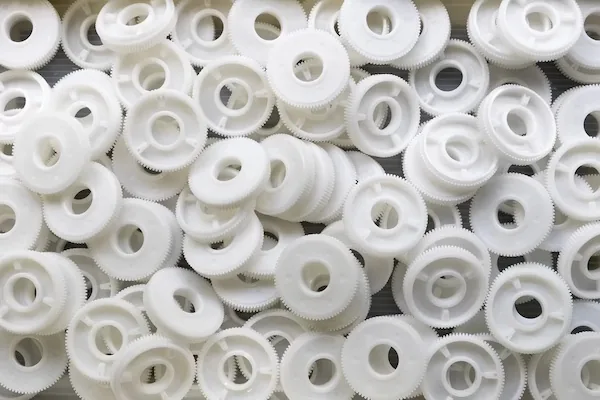
Machined acetal parts shown by Rally Precision
Example image from a former Rally website. Confirm the grade and project specification in the drawing.

Name the material precisely

State the resin type, manufacturer grade where required, colour and any additives. The material specification should tell the supplier whether substitutions are allowed. Delrin product documentation distinguishes acetal homopolymer from acetal copolymer.

Communicate functional features

For bushings, rollers, gears or fittings, identify the mating features and drawing requirements that govern operation. Do not select tolerances from a website headline. Review them in relation to geometry, material condition and inspection.

Review surface requirements

Include edge quality, cosmetic faces and any special marking or assembly requirements. Do not assume that metal finishing processes listed elsewhere on the site are suitable for an acetal part. Discuss the specific treatment and purpose before including it in the order.

Connect material records to the order

Request the documentation needed to establish the specified material and permitted alternatives. A photograph of a black or white component does not identify its resin. Material and inspection records should correspond to the actual batch.

Project questions

Is every POM grade interchangeable with Delrin?

No. Delrin is a named acetal homopolymer family, while POM also includes copolymer grades. Specify the required resin type and manufacturer grade where necessary, and ask the design owner to approve any proposed alternative against the application requirements.

What details help quote an acetal bushing or gear?

Provide the mating geometry, functional clearances, load and service conditions, resin grade, quantity and critical inspection features. State cosmetic and edge requirements separately. A photograph cannot identify the resin or prove that another part will meet the same fit.

Technical references

Material references inform engineering discussion; they do not certify company capability.

Details to include in your RFQ

Project preparation checklist — not a capability specification
TopicInformation to prepare
SpecificationMaterial grade and condition, geometry and current revision
RequirementsQuantity, finish and critical dimensions
DocumentationRequested inspection and material documents

On narrow screens, scroll the table horizontally.

Project planning

Make the acetal callout unambiguous

Acetal and POM names are often used broadly; the quote needs the actual grade and application constraints.

01

Material identity

Specify homopolymer or copolymer if the design requires one, together with grade, color and approved alternatives. Avoid treating a trade name as a universal specification.

02

Moving interfaces

Show bearing, sliding, snap or mating features and the intended fit. State which dimensions matter under the design's service conditions.

03

Production control

For repeated orders, identify revision, batch quantity, material records and inspection needs so the same acceptance basis can be used again.

Project enquiry

Discuss your manufacturing project

Describe your requirements. Attach a drawing if available.

Send a project enquiry or request a quote

Describe your project or quality question below. Drawings are optional; if you have them, accepted formats are STEP, STP, IGES, DXF, DWG, PDF and ZIP. Your request is received only after a confirmation reference appears. For questions, email sales@rallivex.com or contact us on WhatsApp: +86 137 3607 8178.

You can submit without a drawing. If attaching files: STEP, STP, IGES, DXF, DWG, PDF or ZIP; up to 10 files, 20 MB each and 25 MB total. Files are sent only when you submit.