
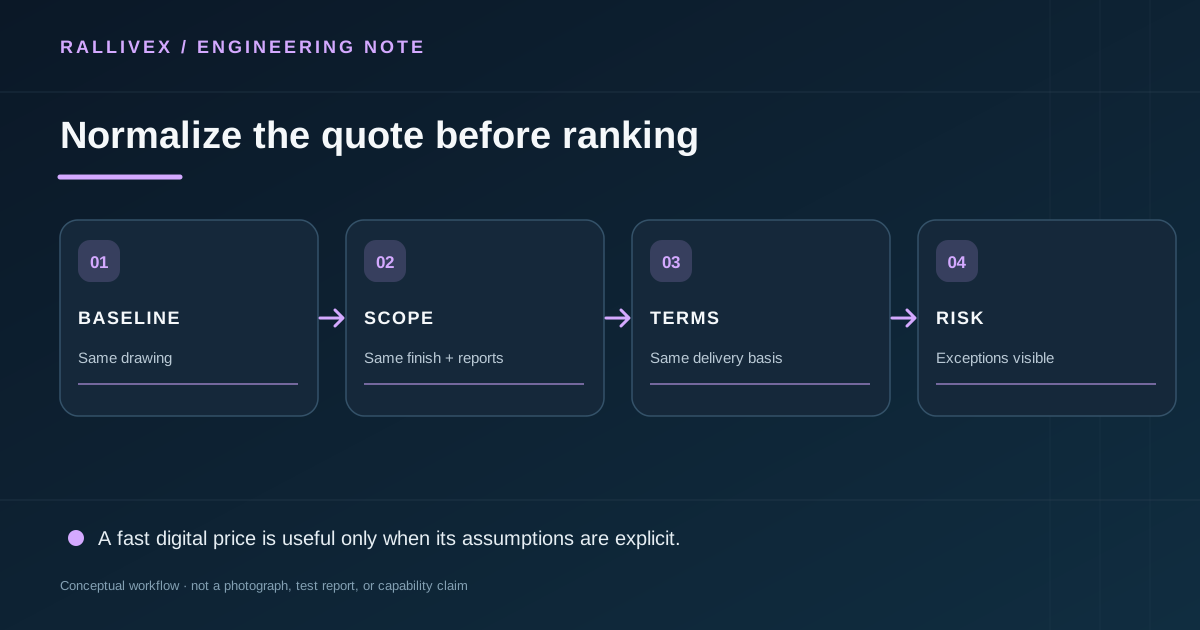
Two CNC prices are comparable only if they buy the same outcome. A low quote may exclude a specified finish or assume a different material form; a high quote may include inspection and packing that another vendor omitted. A simple comparison sheet prevents surprises before a purchase order is placed.
Normalize the technical scope
For each quote, record the drawing revision, model revision, material grade and temper, supplied material form, quantity and any proposed substitutions. List critical dimensions, finish specification and whether the supplier accepted them without exception. If a bidder proposes a DFM change, compare it as a separate alternative rather than mixing it with an as-drawn price.
Normalize the commercial scope
Check whether programming, fixtures, setup, finishing, inspection reports, certificates, packaging, freight and duties are included. Record the price break by order quantity and the validity period. Note the starting point for lead time: purchase order, deposit, drawing approval or receipt of material. Clarify the delivery terms in writing. A headline “fast lead time” is not a commitment until dependencies and the accepted schedule are clear.
Compare risk and communication
Ask how the supplier handles a drawing conflict, material shortage or inspection deviation. Evaluate whether questions were raised early and answered precisely. For critical parts, request evidence linked to the actual legal manufacturing or trading entity and project scope, not a certificate copied from an unrelated company. Keep a written decision record explaining why the selected quote fits the technical and commercial requirements.
Emerging practice: require explainable digital quotes
Automated quoting can make a price arrive faster, but the speed of a number is not the quality of a scope decision. A useful digital quotation should show the input revision, selected material, quantity, finishing, inspection, excluded features and manual-review flags. Treat the output as provisional when geometry, tolerances or supply conditions fall outside the quoting model. This gives procurement a traceable basis for comparing alternatives and prevents a fast algorithm from silently defining the product differently from the engineer.
A useful RFQ invites alternative proposals while preserving one as-drawn baseline. Send the same package and reply deadline to all vendors. Next step: request a RALLIVEX quote with your acceptance criteria and ask for assumptions or exclusions to be stated explicitly.