A useful CNC quote starts with a defined part, not just a 3D shape. A STEP model can communicate geometry, but it rarely tells a supplier which features control the assembly, whether cosmetic surfaces may carry tool marks, or what documents must ship with the parts. Missing details become assumptions, and different assumptions make quotes difficult to compare.
The minimum technical package
Send a neutral 3D model such as STEP or STP when available, plus a revision-controlled 2D drawing or PDF. The drawing should identify units, material and temper, critical dimensions and datums, threaded features, surface finish, edge-break requirements and any notes that affect acceptance. State whether the drawing or model governs if they disagree. Mark the revision clearly so an old attachment cannot be mistaken for the current design.
Add the commercial context: prototype or production use, target quantity per release and expected annual demand if known. If a material grade is only a preference, say whether alternatives may be proposed. If a finish is required, state its purpose—appearance, corrosion resistance, electrical contact or wear—and identify surfaces that must remain untreated. Include mating-part information when fit drives the design, even if those parts will not be purchased in this RFQ.
Emerging practice: a connected product definition
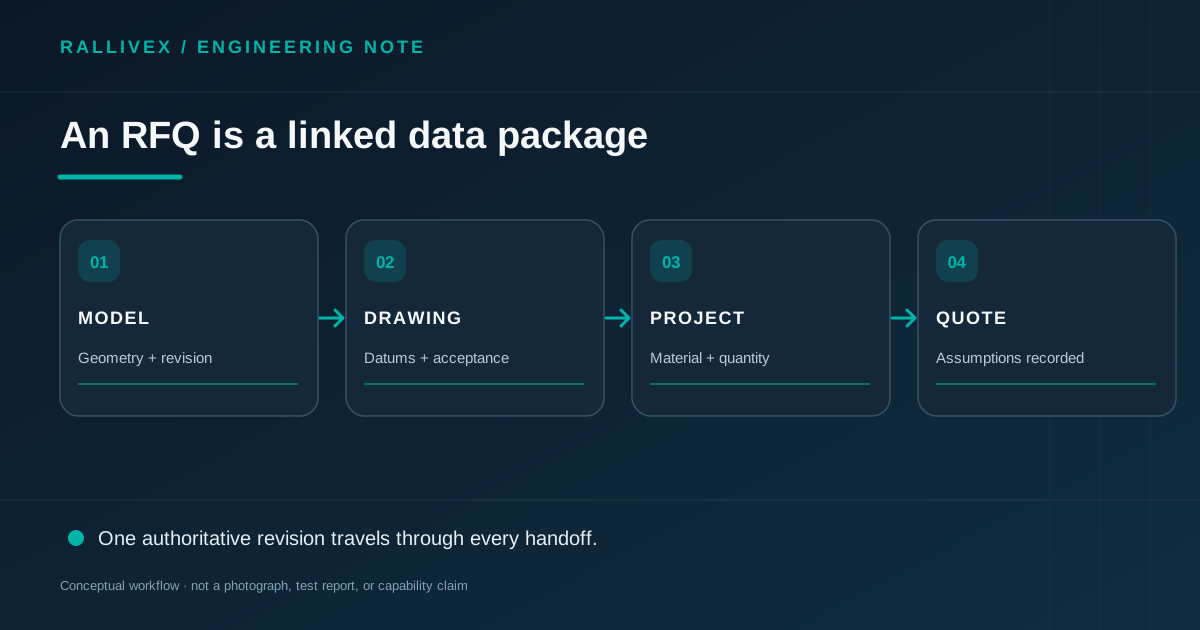
An RFQ can be treated as the first link in a digital thread: the revision-controlled model, its product-and-manufacturing information (PMI), the supplier's process assumptions and the eventual inspection results stay associated with the same part definition. NIST identifies STEP, QIF and other standards as building blocks for this model-based approach, while also noting interoperability gaps. For a buyer, the immediate improvement is simpler than deploying a full digital platform: give each file a revision, name the authority when files conflict, and require the quote to reference that revision. A machine-readable model is helpful only when everyone agrees what it means.
Explain how acceptance will work
Not every dimension needs an individual report. Identify critical-to-function characteristics and request the inspection evidence you actually need: for example, a dimension report, material certificate or process certificate. Agree on the inspection plan before production, including sampling and how a deviation will be handled. A first-article requirement should be stated explicitly rather than assumed.
If design details are sensitive, agree on confidentiality and file-transfer arrangements before sending the CAD. A ZIP may be convenient for multiple drawings, but include a simple file list and a single current revision. Next step: send the model, drawing, target quantity and open questions to RALLIVEX's quote page for a project-specific review. The website accepts CAD drawings through the quotation form and confirms receipt with a reference number.